Higher education institutions are a vital part of society, playing a key role in generating new knowledge, training skilled professionals, driving economic and social innovation, and developing solutions to pressing future challenges. However, the relationship between universities and society is not without its tensions, and higher education institutions worldwide are currently facing increasing pressure to prove their societal value. Based on universities’ focus on study, teaching and research, addressing regional and local needs is therefore of particular importance for the relevance and societal acceptance of higher education institutions. Higher education management plays a pivotal role in this endeavour, which extends far beyond the mere transmission of knowledge.
This web seminar aims to explore the relationship between universities and society. What are the major expectations and how can they be addressed most effectively? What strategies can be employed to foster fruitful and mutually beneficial collaboration with local and regional communities, and who are the relevant stakeholders? What is the role of higher education management in this context? Based on different examples of how universities develop this special relationship, the session will encourage an open discussion about current societal needs and demands, specific challenges and how these can be addressed in a constructive way.
Björn Müller-Bohlen designs and moderates international online and offline events in the fields of education, civil society and science. He has a background in media as well as cultural studies, works as a facilitator and supports organizational development processes. Björn is passionate about open space formats and co-creation.
Iris Danowski studied Spanish and French Language and Literature and History of Art at the University of Cologne and the University of Seville, Spain. In 1991, she started her career as ERASMUS coordinator of the University of Cologne. In 1994, she changed to the German Rectors’ Conference as Head of Section for Europe. In the second half of the nineties, she started building up the cooperation with Latin American partners for the HRK and has been coordinating that field since then. Iris Danowski is member of the Steering Committee of the DIES-International Deans’ Course for Latin America, HRK’s Audit team “Internationalisation of Universities” and Steering Committee of the CUAA/DAHZ.
Tobias Wolf joined the DAAD 20 years ago and possesses extensive experience in the field of higher education management, university cooperation and quality assurance in higher education. He currently works as Head of Section “Development Cooperation – Partnership Programmes, Alumni Projects and Higher Education Management” at DAAD headquarters in Bonn. Tobias Wolf coordinates one of the DAAD flagship programmes in the field of higher education management “Dialogue on Innovative Higher Education Strategies” (DIES). Moreover, he is actively involved in the implementation of various EU-funded projects. Tobias Wolf holds a Magister Artium in Spanish and Latin American Studies, Literature and Sociology from Bielefeld University, Germany. He spent one year of his studies at the University of Cádiz, Spain.
Prof Dr Jürgen Howaldt is the director of Social Research Centre Dortmund, TU Dortmund University, and professor at the Faculty of Social Sciences. He is an internationally renowned expert in the field of social innovation and co-founder and chair of the European School of Social Innovation. In recent years, he has provided important impetus for the development of social innovation research and the formation of a scientific research community. He has published a number of books and scientific articles and has been involved in a number of European research projects on this topic in various roles.
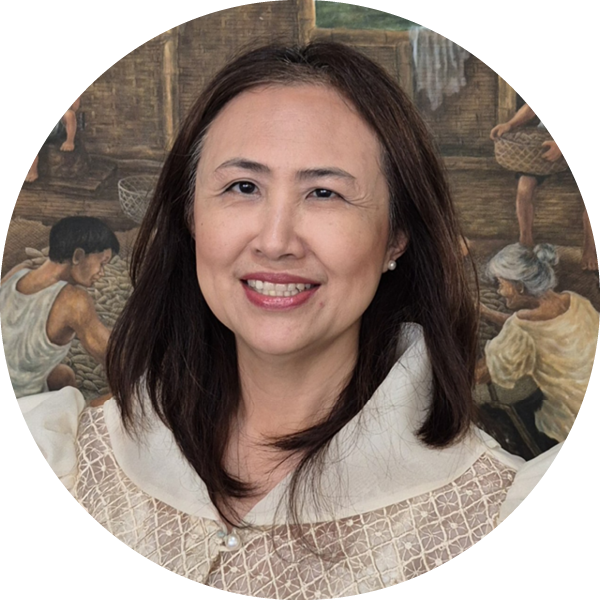
Assoc Prof Dr Lily Ann D. Bautista currently serves as Vice President for Academic Affairs and Research at Silliman University. She earned her Doctor of Philosophy in Administration from Silliman University and her Doctor of Physical Therapy from A.T. Still University, USA. She also holds certifications in orthopedic manual therapy and vestibular rehabilitation. She is an alumna of the International Deans’ Course.
Her leadership appointments include Director of the Institute of Rehabilitative Sciences (2019–2025), Director of Quality Instruction and Excellence at Silliman University (2025-2026), Director of Rehabilitation at Metropolitan Hospital in Metro Manila (1994-1995), Center manager / director of several clinics at Select Physical Therapy, Metropolitan Physical Therapy, and Doctor’s clinic in Houston and surrounding cities (1995-2015), treasurer and board member of the Philippine Physical Therapy Association (2019-2025), Current Executive Committee Member of the International Federation of Manual and Musculoskeletal Physical Therapists, and Current Treasurer of the Philippine Academy of Manual and Musculoskeletal Physical Therapists, Inc.
She was awarded several distinctions as a student, as a professional and as an alumna from various organizations.
Her publications include studies on manual therapy, professional advocacies, muscle energy techniques, and technology-assisted movement analysis, alongside contributions to the World Health Organization’s Package of Interventions for Rehabilitation. She maintains an active presentation record in national and international conferences.
Her research focuses on manual therapy, physical therapy education, professional advancement, service-learning, and community-based rehabilitation, supported by funded projects from the United Board for Christian Higher Education. With over 30 years of clinical and academic experience, she has held leadership roles in rehabilitation practice in the United States and the Philippines.
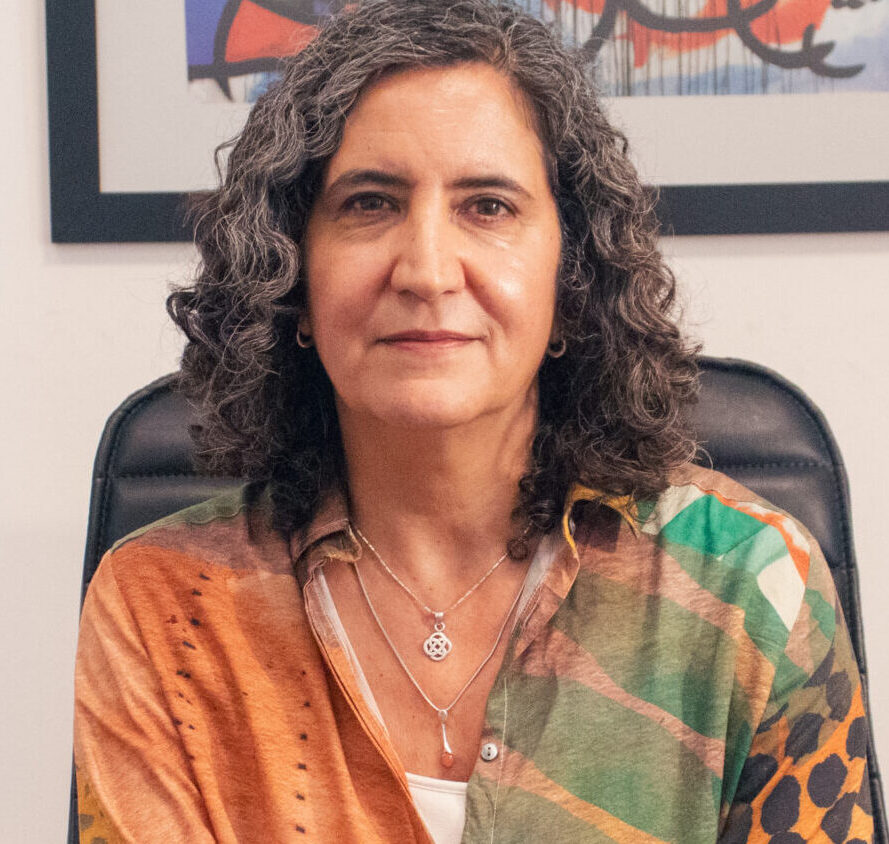
With over 20 years in higher education leadership, she focuses on enhancing the social impact and civic engagement of universities. Her research and teaching cover local democratic governance, advocacy, collective action, and sustainability transitios. She also co-founded Nuestra Córdoba, a civil society network promoting just, democratic and sustainable cities.
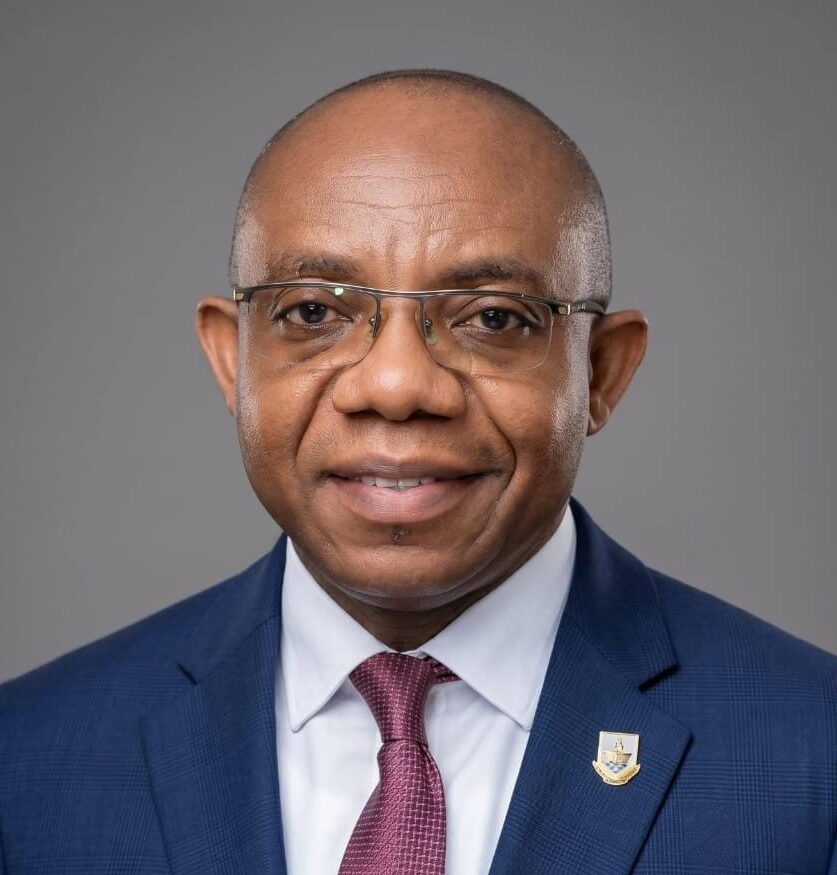
Professor Christian Agyare is a senior academic leader, pharmaceutical scientist, and tertiary education administrator with over two decades of institutional governance experience at Kwame Nkrumah University
of Science and Technology (KNUST). As the Vice-Chancellor, he serves as the chief executive, academic
and administrative head who is responsible for the overall management, strategic direction and daily
operations of the university. His administrative background spans institutional governance and quality assurance, university strategic planning, and national health policy. Prior to his tenure as Vice-Chancellor, he served as Provost of the College of Health Sciences, and headed KNUST’s Quality Assurance and Planning Unit, where he restructured affiliate institution audits and institutional risk management frameworks. Internationally, he has secured over 11 Million USD in competitive research funding, contributed to about 200 scholarly works (Hindex 37; c. 5052 citations), and served as the first African board member of the Society for Medicinal Plant and Natural Product Research (GA).
Universities throughout the world are operating in an increasingly dynamic environment characterised by global challenges. They face intense competition for students, highly qualified researchers and third-party funding. This holds true for developing countries too, where the demand for tertiary education has been skyrocketing over the last decades.
In light of these developments, higher education management in all its particulars is becoming more and more important in the field of international development cooperation. The programme “Dialogue on Innovative Higher Education Strategies” (DIES) has been jointly developed and coordinated by the German Academic Exchange Service (DAAD) and the German Rectors’ Conference (HRK) since 2001. DIES is strengthening capacities in higher education management, both on individual and institutional level. It offers a wide range of tailored activities training courses, dialogue events and university partnerships. – These activities not only foster the competences of academic staff, but also contribute to the enhancement of institutional management at universities in developing countries. DIES focuses on three key partner regions: Africa, Spanish-speaking Latin America and Southeast Asia. Funding is provided by the German Ministry for Economic Cooperation and Development (BMZ).
The DAAD is a joint organisation of German institutions of higher education and their student bodies, devoted to internationalising the academic and scientific research system. With its broad range of scholarship programmes, the DAAD enables students, researchers and university lecturers to take advantage of the best study and research opportunities. Since it was founded in 1925, more than 2.5 million scholars in Germany and abroad have received DAAD funding. Apart from the scholar ship programmes the DAAD supports the internationalisation of German universities, promotes German studies and the German language abroad, advises decision makers on matters of cultural, education and development policy and assists developing countries in establishing effective universities by means of special programmes.
The German Rectors’ Conference (HRK) is the association of state and state-recognised universities in Germany. The HRK currently has 272 member institutions, in which over 90 per cent of all students in Germany are enrolled. The HRK functions as the voice of the universities in dialogue with politicians and the public and as the central forum for opinion-forming in the higher education sector. The HRK cooperates with universities and corresponding organisations all over the world. Its aim is to represent the interest of German universities at an international level and to support German universities in their internationalisation process.