
As higher education institutions deepen their global engagement, strategic internationalisation increasingly calls for approaches that prioritise equity, mutual benefit, and long-term impact. This session with Prof. Nana Aba Appiah Amfo, Vice-Chancellor of the University of Ghana, explores how institutions can design and sustain meaningful partnerships between the Global South and North. It will highlight strategies for fostering balanced collaboration in research and capacity development, as well as the institutional conditions needed to support them. Drawing on the speaker’s experience and concrete examples, the discussion will reflect on how such partnerships can contribute to more inclusive knowledge production and strengthen universities’ societal engagement and impact beyond academia.
Please join the DIES Web Seminar by clicking on the button,
starting on 15 July 2026,
02:00 – 03:00 PM (CEST)
12:00 – 01:00 PM (UTC)

Björn Müller-Bohlen designs and moderates international online and offline events in the fields of education, civil society and science. He has a background in media as well as cultural studies, works as a facilitator and supports organizational development processes. Björn is passionate about open space formats and co-creation.
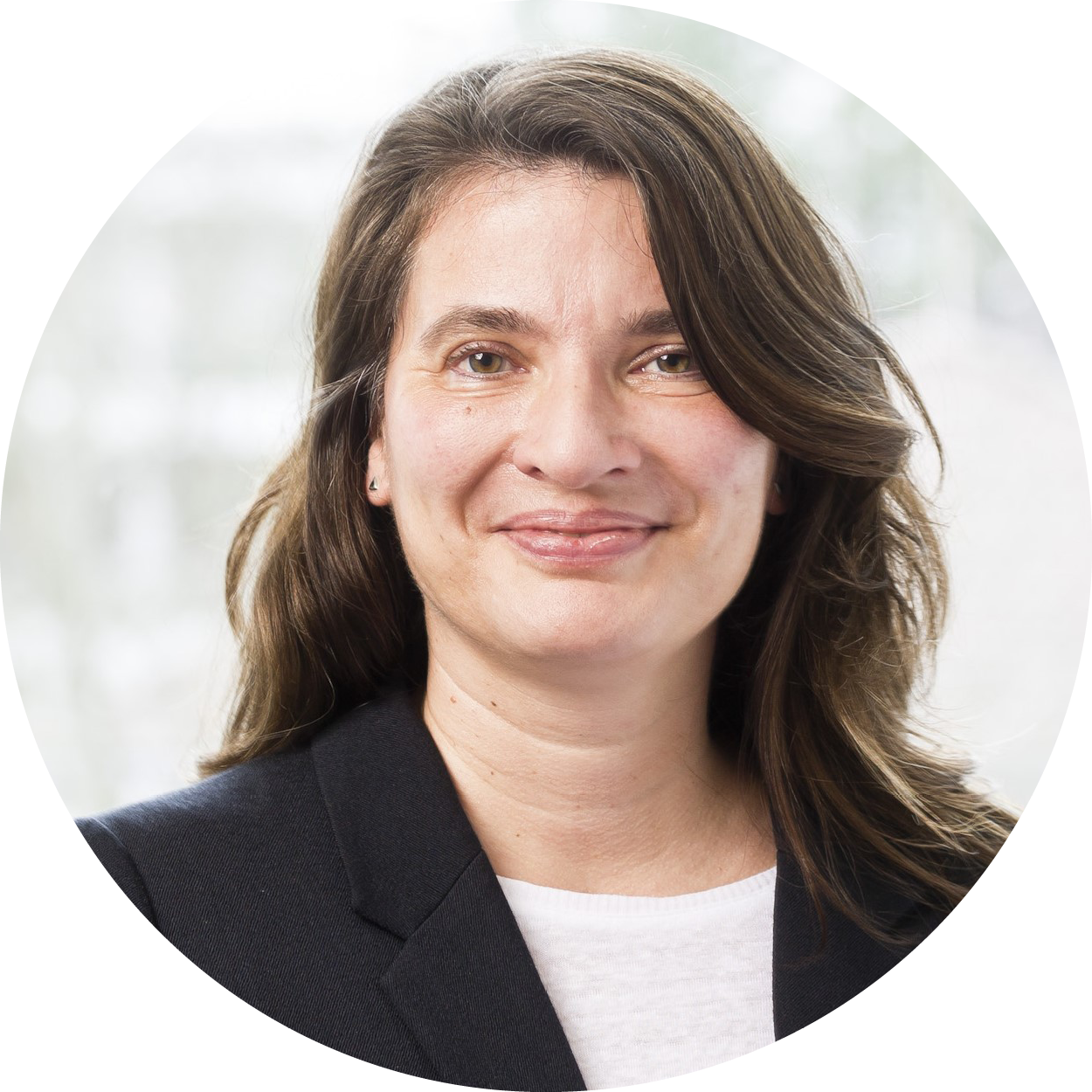
Marijke Wahlers is Deputy Secretary-General of the German Rectors’ Conference (HRK) and heads its International Department. She is one of the members of the founding team of the DIES International Deans’ Course. Before joining the German Rectors’ Conference, Ms. Wahlers was head of international relations at the Furtwangen University of Applied Sciences (Germany) and coordinator of international relations at the Prefectural University of Kumamoto and the Kumamoto Prefectural Government Office (Japan). Ms. Wahlers holds a master’s degree in English linguistics, Japanese studies, and business studies. She studied at the University of Duisburg-Essen (Germany), the University of Washington (Seattle, USA), as well as at the University of Sheffield and Sheffield City Polytechnic (now Sheffield Hallam University) in Great Britain.

Tobias Wolf joined the DAAD 20 years ago and possesses extensive experience in the field of higher education management, university cooperation and quality assurance in higher education. He currently works as Head of Section “Development Cooperation – Partnership Programmes, Alumni Projects and Higher Education Management” at DAAD headquarters in Bonn. Tobias Wolf coordinates one of the DAAD flagship programmes in the field of higher education management “Dialogue on Innovative Higher Education Strategies” (DIES). Moreover, he is actively involved in the implementation of various EU-funded projects. Tobias Wolf holds a Magister Artium in Spanish and Latin American Studies, Literature and Sociology from Bielefeld University, Germany. He spent one year of his studies at the University of Cádiz, Spain.

Professor Nana Aba Appiah Amfo is the Vice-Chancellor of the University of Ghana and the first woman to hold the position in the University’s history. A distinguished scholar and higher education leader, she has played a leading role in advancing research excellence, international collaboration, and institutional transformation within Africa and globally. Professor Amfo currently serves as Chair of the Council of the Association of Commonwealth Universities (ACU), Chair of the Worldwide Universities Network (WUN) Partnership Board, and Vice-Chair of the African Research Universities Alliance (ARUA). She is also President of the African Humanities Association (AHA) and the International Federation of Modern Languages and Literatures (FILLM). Under her leadership, the University of Ghana has strengthened its position as a leading research-intensive university in Africa through strategic global partnerships, innovative approaches to teaching and learning, and a strong commitment to equitable and mutually beneficial international collaboration. She is a strong advocate for reimagining internationalisation through partnership models that promote reciprocity, co-creation of knowledge, capacity strengthening, and shared impact. Professor Amfo holds a BA from the University of Ghana and MPhil and PhD degrees from the Norwegian University of Science and Technology (NTNU), Norway. She is a Fellow of the Ghana Academy of Arts and Sciences, a DAAD Fellow, an alumna of the Alexander von Humboldt Foundation, a Commonwealth Professional Fellow, and a participant in the International Women’s Forum Leadership Foundation programme. She is widely sought after as a speaker on higher education leadership, research partnerships, and the future of global knowledge production.

Dr Mary Mwadulo is the Dean of the School of Computing and Informatics at Meru University of Science and Technology, Kenya, and a senior lecturer with over ten years of experience in teaching, research, and academic leadership in computing. Her academic interests include machine learning, predictive health systems, and responsible computing, with a strong emphasis on the ethical and impactful applications of artificial intelligence. In academic leadership, Dr Mwadulo has served as Chairperson of the Department of Computer Science and has led several key university committees. She currently provides strategic leadership as Dean, with responsibilities in curriculum development, quality assurance, strategic planning, and institutional development. Her research leadership includes serving as Principal Investigator for a Mozilla Foundation Responsible Computing Challenge grant focused on integrating ethical and responsible AI practices into computing education. She is also a Co-Principal Investigator for an IDRC-sponsored project examining the intersection of artificial intelligence and the labour market. In addition, she actively participates in various forums advancing frameworks for the responsible adoption of AI in higher education.
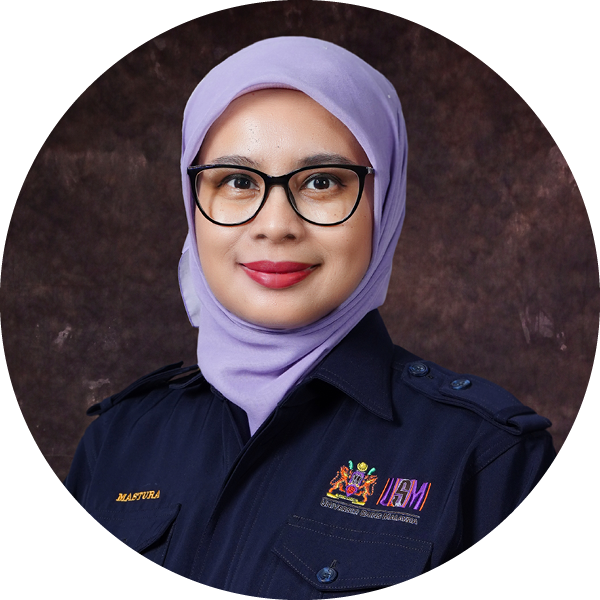
Mastura Azmi is currently the director for the University Academic Quality Centre, Universiti Sains Malaysia. She is also a senior lecturer in geotechnical engineering at the School of Civil Engineering, USM. Prior to holding the director post, she was the deputy director of the office and was the deputy dean of academic, career, and international at the School of Civil Engineering and the academic manager for the same school.
She holds a doctorate from Kyoto University, Japan (graduated 2014), and a master’s degree from Universiti Teknologi Malaysia under the geotechnical engineering specialization (graduated 2005). Her research interests include landslide risk reduction, unsaturated soil mechanics, Geographical Information Systems (GIS), engineering education, and outcome-based education. Her research interest aligns with her research grants and projects, which involve collaborations with CREAM-CIDB, Erasmus, MOHE, and universities.
Mastura Azmi is a qualified auditor for several authorities such as the Malaysia Qualification Agency, the ASEAN University Network QA, and the Board of Engineers, Malaysia, for the Engineering Technology Accreditation Council. She is a professional engineer under the Board of Engineers, Malaysia, and also a professional technologist under the Malaysia Board of Technologist.

Ivón holds a PhD in Humanistic Studies with an emphasis in Ethics from the Tecnológico de Monterrey (2012), a Master’s degree in Political Philosophy from the University of York, UK (2004), and a Bachelor’s degree in International Relations from the Tecnológico de Monterrey (2001). She has been a member of the National System of Research in Mexico at Level 1 since 2014. Throughout her career at the Tecnológico de Monterrey, she has held both academic and management roles: she began as an assistant in the Humanities Department in 2006, later served as Program Director for two undergraduate programs at Campus Santa Fe, Chair of the Humanities Department (2011–2014), Research Professor at the School of Humanities and Education from 2014, coordinator of the Erasmus+ project Students4Change (2017–2019), and since 2022 she has served as Associate Dean of Faculty. In terms of research, she published the book La tolerancia, una virtud necesaria para la Convivencia (Editorial Porrúa, 2016) and has contributed articles and chapters to national and international journals and collective works on topics such as peace, the body, violence, and migration. She is also a member of the Editorial Committee of En-Claves del Pensamiento (indexed in Scopus), a member of the UNESCO Chair in Ethics, Peace Culture and Human Rights at the Tecnológico de Monterrey, and has coordinated the Research Group on Humanities for Sustainable Development since 2021.
Universities throughout the world are operating in an increasingly dynamic environment characterised by global challenges. They face intense competition for students, highly qualified researchers and third-party funding. This holds true for developing countries too, where the demand for tertiary education has been skyrocketing over the last decades.
In light of these developments, higher education management in all its particulars is becoming more and more important in the field of international development cooperation. The programme “Dialogue on Innovative Higher Education Strategies” (DIES) has been jointly developed and coordinated by the German Academic Exchange Service (DAAD) and the German Rectors’ Conference (HRK) since 2001. DIES is strengthening capacities in higher education management, both on individual and institutional level. It offers a wide range of tailored activities training courses, dialogue events and university partnerships. – These activities not only foster the competences of academic staff, but also contribute to the enhancement of institutional management at universities in developing countries. DIES focuses on three key partner regions: Africa, Spanish-speaking Latin America and Southeast Asia. Funding is provided by the German Ministry for Economic Cooperation and Development (BMZ).
The DAAD is a joint organisation of German institutions of higher education and their student bodies, devoted to internationalising the academic and scientific research system. With its broad range of scholarship programmes, the DAAD enables students, researchers and university lecturers to take advantage of the best study and research opportunities. Since it was founded in 1925, more than 2.5 million scholars in Germany and abroad have received DAAD funding. Apart from the scholar ship programmes the DAAD supports the internationalisation of German universities, promotes German studies and the German language abroad, advises decision makers on matters of cultural, education and development policy and assists developing countries in establishing effective universities by means of special programmes.
The German Rectors’ Conference (HRK) is the association of state and state-recognised universities in Germany. The HRK currently has 269 member institutions, in which over 90 per cent of all students in Germany are enrolled. The HRK functions as the voice of the universities in dialogue with politicians and the public and as the central forum for opinion-forming in the higher education sector. The HRK cooperates with universities and corresponding organisations all over the world. Its aim is to represent the interest of German universities at an international level and to support German universities in their internationalisation process.